
Games are coming thick and fast for Plymouth Argyle at this point in the season and unfortunately the most recent fixtures have been fairly dismal for the Pilgrims.
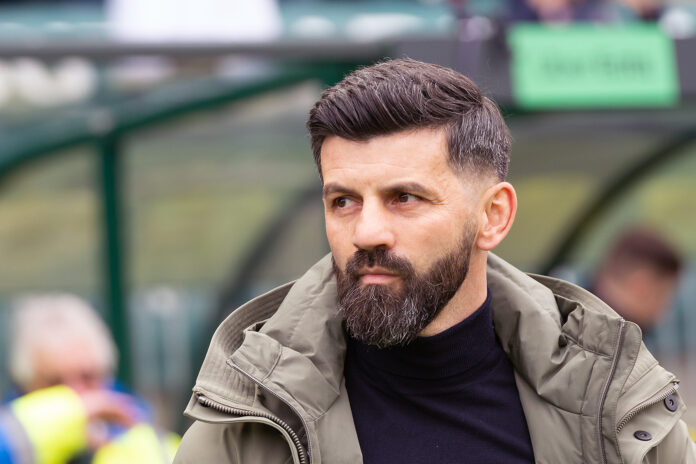
The recent FA Cup run ended in a battling away performance to Manchester City in front of nearly 8,000 members of the vociferous Green Army. Subsequent defeats to Sheffield Wednesday and Hull City within a week have Argyle rooted to the foot of the Championship table and 6 points from safety. It was never going to be easy for new manager Miron Muslic and he is quickly realising the extent of the challenge in front of him and his players.
The Greens have 2 more games this week against Portsmouth (A) and then Derby (H) both of which fall squarely in the ‘must win’ category if Argyle are to have any hope of avoiding relegation.
For the latest Argyle Life article for the Plymouth Chronicle, Sam Down gives his thoughts on the opening couple of months of the Muslic era.
I don’t think it’s any exaggeration to say that the last two months supporting Plymouth Argyle are amongst the most eventful in the club’s history. I wrote previously about the chaos of January and the late appointment of Miron Muslic, resulting in a major change of our transfer strategy.
After a dismal trio of home games, Miron Muslic cited ‘proof of life’ in the battling draw at Sunderland. Argyle went into the home game against West Brom 15 games winless and confidence still very much at a low.
The game started much like that against Sunderland – Argyle did not look much like scoring but not a lot like conceding either. When we went behind in the second half, the game at Sunderland was looking increasingly like a false dawn.
Then, from nowhere, came the first green shoots of recovery. Long-standing forward Ryan Hardie was bought on by Muslic in a different position. He was a number ten, bought on to stretch the defenders during the quick transitions that Muslic values so highly. He at first converted a penalty before putting a golden chance on a plate for Michael Obafemi.
This was missed, but Hardie himself proved the match winner just moments later with a wonderful shot fired past former Green Alex Palmer. Muslic had proved he could make changes to influence a game positively and got that long awaited win.
Thereafter, of course, came the euphoria of the Liverpool game. Nobody gave the greens a hope heading into it. Eyebrows were raised when the Liverpool squad left out most of their premier league stars.
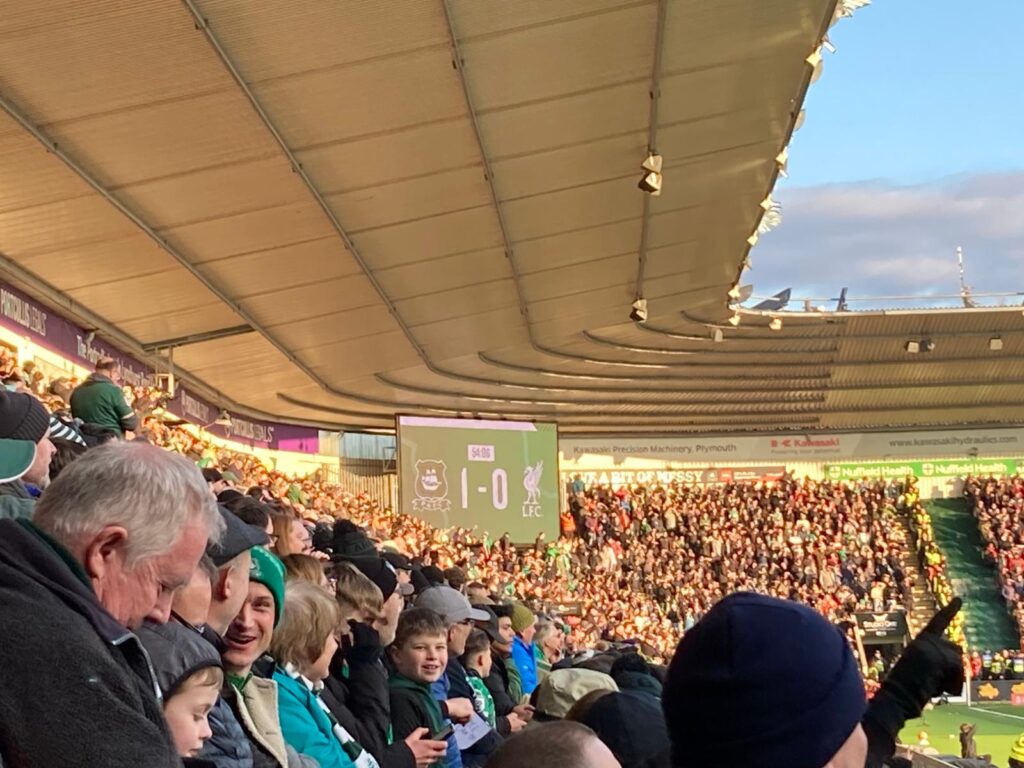
They were soon accused of underestimating the Greens when they struggled to break down the resolute Argyle defence, marshalled by Talovierov and Katic. As the second half went on, the unthinkable happened. Harvey Elliott handled the ball and Ryan Harvey slotted it home from the spot to send Home Park into raptures.
The rest is history: Argyle held firm and the city exploded with joy. To paraphrase the words of Paul Sturrock about our 2002 title season: it wasn’t just an Argyle day, it was a Plymouth day.
I saw, spoke to, and celebrated with people I’ve not seen in years. Old school friends, work colleagues, regular commenters of the podcast and new pals all in turn.
The trip to Manchester City in the next round was the cherry on the cake. The Green Army (by the time you have read this) will have taken many thousands to Manchester and likely been the noisiest away support they’ve seen all season.
Then came the Millwall game. Surely, we thought, it would be a case of ‘after the Lords Mayor’s show’. Absolutely not, as it turned out. Argyle blitzed Millwall into a 5-1 victory and the mood could not be any higher.
View this post on Instagram
In all of these games, there was a common theme around Argyle’s dominance. We weren’t playing a conventional possession based style. Our approach was a mixture of defensive excellent and chaos ball in attack.
Against the Premier League opponents (and West Brom), the approach was ‘safety first’ at its most fundamental. We defended our box very well and tried to hit on the counter where we can. We also demonstrated excellent final third pressing: our players descended on the opponents like a green swarm of wasps, constantly pushing our adversaries into mistakes.
Versus Millwall though, we also added a new element. While the previous games were (understandably) defence first, this was full-throttled attack and dominance against a side who didn’t know how to play us. Fans would be forgiven for thinking the Miron Muslic era would be plain sailing towards survival.
Since then however, it would be fair to say that whatever the honeymoon period was, it’s now very much over. The loss at Blackburn was as lacklustre as it was humbling – only Argyle could let Adam Forshaw score after the schadenfreude we dished out to the hosts for signing him.
The following Wednesday night at Luton felt like a missed opportunity. Although in one sense, Argyle were unlucky to not be awarded the opening goal (Callum Wright being very dubiously flagged offside), Luton missed two big chances to score and Argyle netted with virtually their only other chance all game. In one sense, not a bad result and kept in touch of the chasing pack. In another, the chance to close the gap was missed.
Against Cardiff, the first rumblings of discontent were heard regarding the style of play. Despite the visitors being a pretty poor side, Argyle seemed largely content to put men behind the ball and did not truly threaten the goal.
When we went behind, hopes of survival seemed to be ebbing away. The second half saw the introduction of Bali Mumba in the ‘number ten’ role to great effect, with Mumba going through on goal and drawing a red card out of Cardiff. Mohammed Tijani got the equaliser, demonstrating that Muslic is perfectly adept at making in game adjustments to help get results.
However, there are unarguable downsides to the ‘kick it long, press it hard’ style of play. To some extent, in the early February games, teams were taken aback by such a dramatic change in style and did not know how to respond to it.
Now, teams are gradually learning how to set up against Argyle. When they win the first and second balls that are launched up the field, it becomes much harder for us to progress the ball onto dangerous areas.
We are still attempting our pressing game but teams are gradually learning to play through the press. Ultimately, the danger here is that we get sucked into game situations where we are unable to get any control and are pushed into defensive mode.
This is not to be the harbinger of doom: there’s still every chance that things work out better. Maybe, when players are a little less leggy and the fixture schedule is a little less hectic , we’ll get that fraction better at winning those aerial battles.
Maybe against teams where (as in the Liverpool game) we just accept the total lack of possession and embrace it, we’ll be more suited.
The Man City game comes to mind here! Or maybe we’ll just make gradual adaptations to a more mixed style.
Overall, the Muslic era so far has definitely had some amazing moments but the danger is that the style is as such that we end up getting outplayed in more games than not. It’s a big few games for Argyle and the next time I write, we should know a lot more about our chances of survival.
Read The Previous Argyle Life Article