

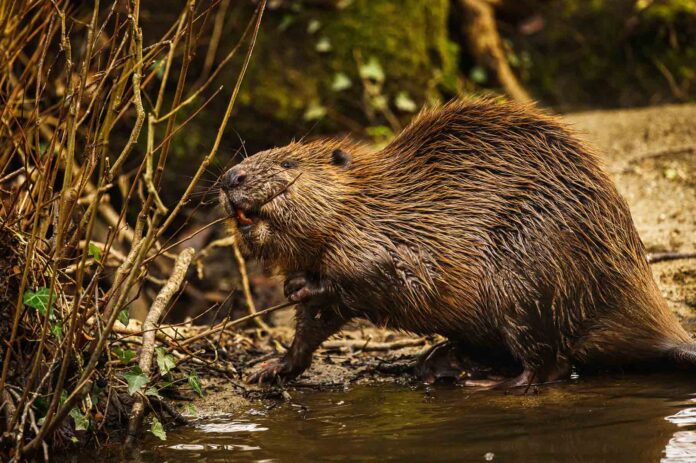
The first beaver in Plymouth for over 400 years finally has a female companion.
The female Eurasian beaver arrived in Plymouth in January and was immediately released in the specially designed re-wilding enclosure near Poole Farm.
Remarkable footage shows her meeting with her companion, who was released in November last year, for the very first time. Having left her cage, she swam around the pond for several minutes, before the male emerged from his lodge. They swam together before having a little ‘getting to know you tussle’ in the water.

Like her male friend, the new arrival weights around 20kg and was also caught in the wild in the Tay Catchment in Scotland.
The pair’s behaviour and actions will now be monitored in the hope that its actions will reduce flooding further downstream and create habitats for wildlife in the Bircham Valley.
It’s all part of the Green Minds project, a city council initiative which will re-wild urban parks, gardens and verges and introduce a new system of working with partners. Crucially, it will encourage more people from all walks of life to enjoy the health benefits that our green spaces provide.
Although around 20% of beavers are solitary, most are sociable and prefer to live in family groups where they build dams, ponds and live in lodges together. We’ll be keeping a very close eye on proceedings.
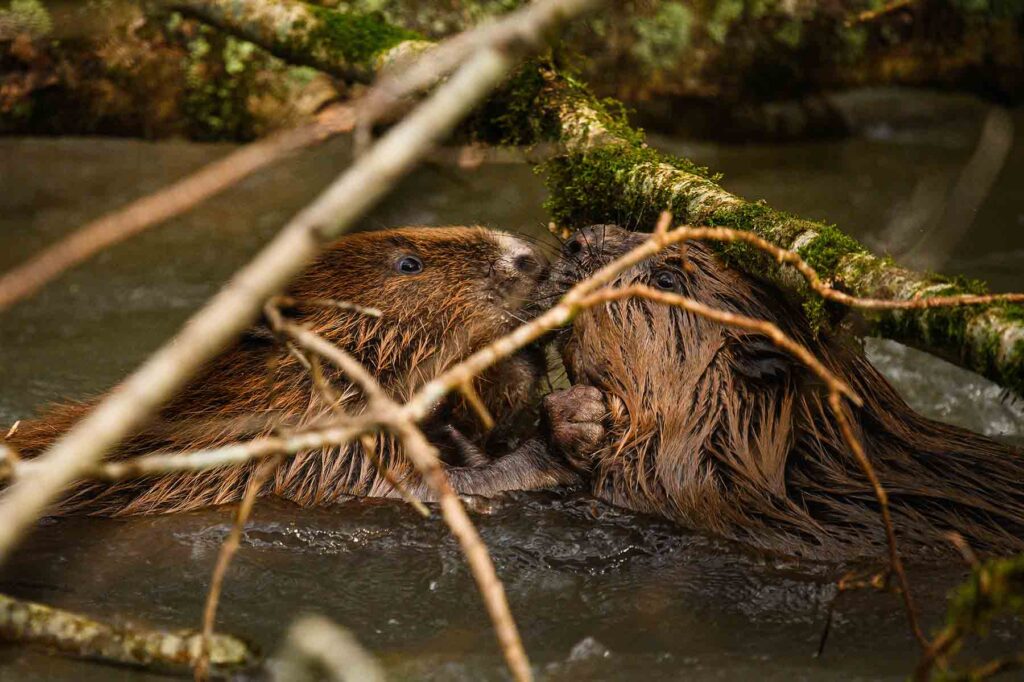
The introduction of the new arrival continues the work of the Green Minds project, which will create more spaces for wildlife and nature in different pockets around the city and encourage more people to connect with nature.
As well as being charismatic, beavers are fascinating creatures as they engineer their surroundings by felling trees, damming sections of river and creating a network of canals. They also create wetland habitats which are great for birds, fish and invertebrates and they also ‘slow the flow’ of water during and after rainfall that can help reduce flooding downstream.
Two very similar rivers – Bircham and Seaton – will be monitored to see how the beavers are able to make positive impacts. We can compare and contrast with the Seaton stream which has similar characteristics.
Beavers also lead to improved water quality and quantity and store carbon in a really efficient way to help combat the climate emergency.
Both the beavers have come from the Tay catchment in Scotland. There, beavers have been in the wild for some time and as a result, where there are conflicts with farmers, a licence can be obtained to cull them. Both beavers have been rescued from this fate and will now live a very happy life in the six hectare re-wilding enclosure, which covers 600 metres of river in a wooded valley.
The city council has been working with partners including leading beaver experts at Devon Wildlife Trust, re-wilding specialist Dereck Gow and Roisin Campbell–Palmer, the UK’s top beaver ecologist, to ensure the beavers settle in.
For more information visit www.greenmindsplymouth.com or follow the Natural Infrastructure team on social media at www.facebook.com/natureplymouth and www.twitter.com/ NaturePlymouth
Find out more about Poole Farm and the surrounding Derriford Community Park project go to www.plymouth.gov.uk/poolefarm