

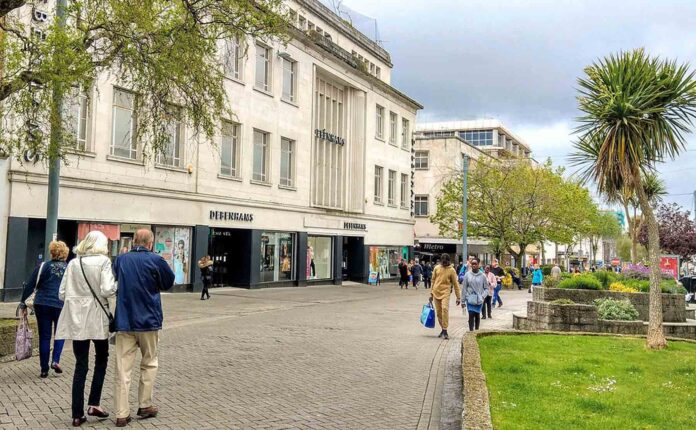
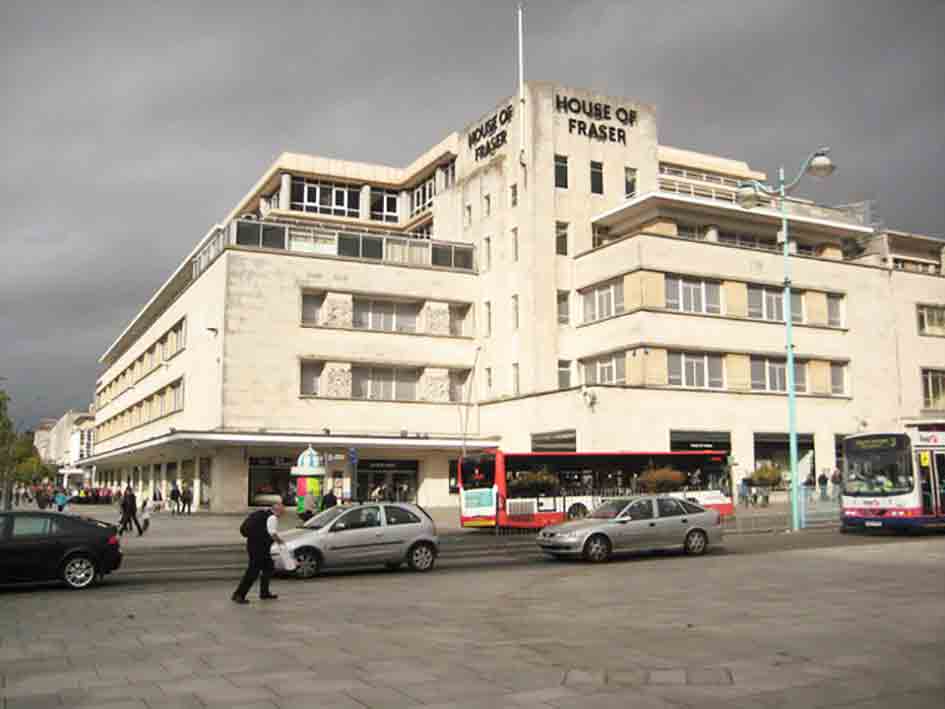
Bold and brave decisions will be needed on the future of the former Debenhams and House of Fraser stores in Plymouth City Centre.
That’s the view of Steve Hughes, chief executive of the Plymouth City Centre Company. He called for landlords to be more realistic on rents and urged for reforms to be made to the business rates system ‘which is crippling the retail and hospitality sector and stifling investment.’
Steve’s views were included in a document called ’Saving the High Street’ which was published in the latest edition of Plymouth White Papers – a collection of reports by civic leaders and other members of the community.
The Plymouth White Papers are an initiative of Luke Pollard MP and the third in the series was launched in mid-April with the title ‘Recovery.’ Previous White Papers published in 2018 and 2019 were entitled ‘Ambition’ and ‘Marine.’
The latest publication focussed on how Plymouth would recover from the effects of the pandemic and featured reports by a number of influential figures including Amanda Lumley, chief executive of Destination Plymouth, Laura Kriefman, chief executive of the Barbican Theatre and Tudor Evans, Leader of Plymouth City Council.
There were also contributions from individuals involved in the education sector, food poverty and young children and families.
In his section Steve Hughes said:
“In Plymouth city centre retail vacancy rates rose to more than 20 per cent in March this year with more than 100 units now permanently closed. Hundreds of retail staff have lost their jobs as a result.
“Against this backdrop, it would be easy to think the high street in general and Plymouth City Centre will never be the same again. And that’s true – we will never again fill all those empty shops with similar retail offers, nor should we.
“But that doesn’t mean the death of the high street – it means we have to adapt and COVID-19 has simply accelerated the pace of that change.
“What successful high streets need now is a new approach. Strong high streets need to be places people want to go to, not just for shopping, but for everything that they have been missing during these toughest of times. They will want to go to places where they can meet friends, family and colleagues in pleasant surroundings. Somewhere, they can sit outside, eat and drink, and take in some street theatre or public entertainment.
“The spaces between the buildings should be every bit as important as the spaces inside. Clean, green, clutter free, contemporary, well-lit, safe and a pleasure to walk or cycle through. “Successful high streets will have a year-round events programme, a strong evening economy and variety of things to do and see. Culture and public art will become increasingly important. And so will the customer experience. If it’s not good enough, the customer will simply go elsewhere.”
He said that thanks to a forward thinking city council and its strong ethos of partnership working, Plymouth was ahead of the game and much of this was happening or already on the way.
“We recognised years ago that the city centre retail footprint was too large and that we needed a much more vibrant and diverse offer, encompassing leisure, commerce and culture, giving people more reasons to visit.
“That work started to bear fruit last year with the opening of The Barcode, a £53 million new leisure and restaurant complex, including CineWorld multiplex cinema and giant IMAX screen. This was quickly followed by the opening of The Box, Plymouth’s new £50 million museum and art gallery – the biggest cultural attraction to open in the UK in 2020. The benefit of both those schemes to the city centre economy will be huge, but has been delayed by the COVID lockdown.
“With the easing of COVID restrictions, and a huge city centre renaissance programme underway, we are doing the right things in Plymouth to create a city centre that we can be proud of and will, once again, be a focal point for residents and a popular destination for new visitors. With the conversion of the Civic Centre into a conference centre and apartments now confirmed, along with huge improvements at the railway station, new health hub for Colin Campbell Court and major improvement works to its streets and public spaces, Plymouth has much to look forward to.
“Investors are interested in Plymouth’s plan for the future as shown by the recent opening of Hugo Boss in Drake Circus and the soon-to-be open craft ale bar BrewDog at The Barcode. Add to this, the move by B & M and two restaurants into the former BHS building, the planned Premier Inn at Derrys Cross and the new 95-bed Hotel Oyo above the former Woolworths store and there is strong evidence that there is huge potential for our city centre to emerge from this crisis in good spirits.”
In his introduction to the White Papers, Luke Pollard MP said:
“Plymouth is an incredible place to live, visit, work and play. Our challenge is to ensure that as we emerge from the pandemic, from austerity and from the recession we are a better, fairer and greener city. It can be done – and it must be done.”