

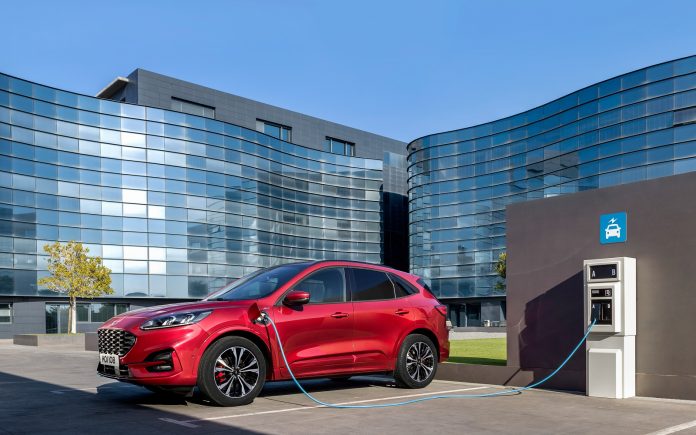
More people are choosing to move away from traditional petrol or diesel powered vehicles in favour of hybrids and electric vehicles, which is a great way to help reduce your carbon footprint.
2020 is set to be the year of the mainstream electric vehicle with nearly all major manufacturers launching one, two, three or even fourteen (Ford) new electric or hybrid models.


This is one of the most significant changes in motoring in many years and many drivers have questions: Just what are the different types of electric vehicle to choose from? And having driven traditional internal combustion engine vehicles for so long, how can we overcome our doubts about this new technology?
What are your options?
Battery Electric Vehicles (BEV) are fully electric with an electric motor powered by a re-chargeable battery. They have no need for petrol or diesel and subsequently produce zero tailpipe emissions.
The most common questions are: How far can you drive once charged? Where can you charge them? And how long do they take to charge?
Two popular BEVs on the market, the Renault ZOE and Nissan Leaf, boast ranges of over 235 miles on a full charge; more than enough for most drivers.
The majority of BEVs can be charged at home via a standard plug – this can take several hours and as a result many electric vehicle owners choose to leave their motor charging overnight. Faster chargers with mains supply can be installed at your home, often included at a discounted rate with the purchase of a new electric vehicle.
An increasing number of public places have charging points that are free to use for the duration of your visit. Thankfully these chargers, like those found at service stations, are significantly faster charging; some offer a charge of up to 90 miles in range in just 30 minutes. Where they are not free to use typically that only costs around £6.50. Much cheaper than filling up with petrol or diesel!
The technology for charging is constantly improving so you can expect these times to get quicker. Both local and national government have promised an increase in the number of charging stations across the country with more than you might think already spread throughout Devon and Cornwall.
Our conclusion: Despite the massive savings in running costs vs traditional ICE vehicles, charge times of 30mins + will not suit all road users and currently BEVs are most beneficial if you are looking for a city run-around or short commute vehicle.
Hybrids
If you do a lot of driving or regularly travel long distances but still want to invest in a more eco vehicle, you should consider a Hybrid.
Hybrid Electric Vehicles (HEV) switch between using an electric motor and a fuel engine, or run a combination of both at different points of your drive, to give maximum efficiency and power.
HEVs are usually a lot cheaper to run than petrol or diesel vehicles, with high miles per gallon and low road tax benefits. They also have much lower carbon emissions and as a result are better for the environment and do not accrue congestion charges in cities with congestion or green zones.
These vehicles charge their on board electric battery during braking to further increase efficiency. In terms of filling up, you only have to put in the fuel for the main engine as normal, nothing new to learn there!
Our conclusion: These vehicles are perfect for anyone wanting to help the environment, save money on running costs, and own a vehicle similar to a traditional vehicle.
 Plug-In Hybrid Electric Vehicles (PHEV) come with a fully electric motor that you charge by plug-in, which will complete short journeys on electric only mode and have a conventional fuel engine to help you achieve long distance trips. The main difference between a HEV and a PHEV is that most hybrids will only travel short distances on electric-only power, whereas PHEVs will travel from 10 to 40 miles solely on electric, making them better for the environment and cheaper to run for a lot of people.
Our conclusion: This newer form of hybrid vehicle seems to offer the best of both worlds, a great fit for the majority of drivers.
What next?
You may be interested in learning more or even ready to consider the purchase of an electric or hybrid vehicle and there is no better place to take the next step than Vospers. With a huge range of vehicle manufacturers and helpful staff on-hand to answer your electric hybrid questions, visit Vospers at Marsh Mills to start your electric journey, or online at Vospers.com.

“There is no doubt that electric vehicles will arrive on our roads at a faster rate than first envisaged as a result of the environmental benefits and Government emission reduction targets. However, what sort of electric vehicle will depend on many factors – how far do you drive? What sort of roads are you driving on? What speed will you average as a result of your regular journey? Are you well served with charging points and ideally can you have one installed at home? (this is possible if you park off road)
Vospers have been selling electric vehicles for several years and I and my son, Nick have driven them and know the benefits and limitations. Our advisors will give motorists the advice to allow motorists to make the right decision at the right time to gain maximum benefit. It’s going to be an exciting journey!”
– Peter Vosper