

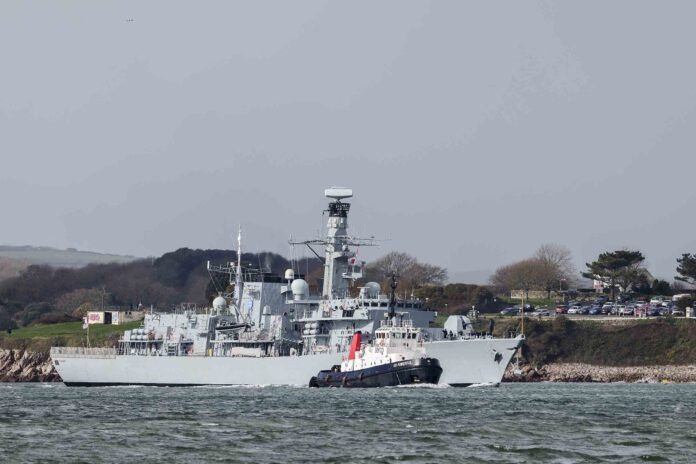
Plymouth-based HMS St Albans is back at sea for the first time in four and a half years – the penultimate Royal Navy frigate to undergo a massive overhaul.
The Type 23 warship left Devonport Naval Base on the first stage of her regeneration to return her to front line duties later this year. She’ll spend the next few weeks flashing up her systems and testing her improved and refurbished machinery in the Channel to ensure all the work which has been carried out is effective.
The ship’s 178-strong crew moved back aboard in mid-November, since when they’ve been working hand-in-hand with contractors and engineers from defence firm Babcock, which has overseen the entire refit programme, to prepare The Saint to move under her own power for the first time since 2019.

RELATED PLYMOUTH NEWS
Babcock begins work to extend life of Devonport-based HMS Argyll
HMS St Albans’ Commanding Officer Commander Helen Coxon said:
“Going back to sea is a huge milestone. Today is the result of a real team effort where the ship’s company, Babcock, other specialist contractors, shore-based support organisations, Devonport Naval Base and even some people from other Devonport-based ships have come together to help us transition from engineering project back to being a warship.
“Whether it is the first day at sea – as is the case for many of our less experienced sailors– or returning back to where we feel at home for the more experienced, today is a big day and we’d like to thank all those involved in making it happen.”
The extensive refit was completed three months ahead of schedule by Babcock. During her time in dock, skilled Babcock engineers and other tradespeople spent around 1.2 million working hours carrying out a significant number of updates and upgrades to keep the platform at the leading edge of warfighting capability, including a substantial power generation and machinery upgrade, the removal, overhaul and replacement of both propulsion motors, and finally stripping and repainting her entire hull.
As a war machine, St Albans emerges from the revamp as a far more potent warship: all weapons and sensors have been upgraded, not least the installation of the Sea Ceptor air defence system which can provide protection to an area the size of Greater Manchester against incoming threats in the skies.
RELATED PLYMOUTH NEWS
As a dedicated submarine hunter, the ship has been fitted with Sonar 2150 which can detect underwater threats at greater range and is easier to operate.
Crew facilities have also been improved and modernised to support the personnel living on board.
The teams that readied HMS St Albans proudly gathered at the dockside to see her off and were joined by Royal Navy colleagues and representatives from across Babcock’s Devonport operation.
Gary Simpson, managing director of Babcock’s Marine Support business, said:
“Working on behalf of Defence Equipment and Support preparing HMS St Albans for sea again is central to ensuring our customer’s critical services are readily available, affordable, and long-lasting.
“Our skilled teams of engineers, fabricators, technicians, and other experts, with the support of DE&S, the Royal Navy and specialists in our supply chain, worked tirelessly to ensure the complex and extensive refit of HMS St. Albans was a resounding success. Watching her leave for sea trials was a proud moment for everyone involved.”
After nearly 20 years of constant service in the Atlantic, the Mediterranean and the Gulf, St Albans arrived in Plymouth in 2019 to begin preparations for the refit, known as the life extension (LIFEX) upgrade.
The upgrade will help carry the class of Duke-class frigate into the middle of the next decade, while their successors – the Type 26 City-class currently under construction on the Clyde – enter service.
After the initial trials in the Channel, St Albans will return to base for any necessary tweaks to the work carried out in refit, before starting her work-up to becoming fully operational again, which culminates with Operational Sea Training off Plymouth.
Just one Type 23 frigate is left to complete the LIFEX programme: HMS Sutherland, which is currently in Devonport’s frigate refit complex.
RELATED PLYMOUTH NEWS
Devonport Royal Dockyard infrastructure to benefit local firms