
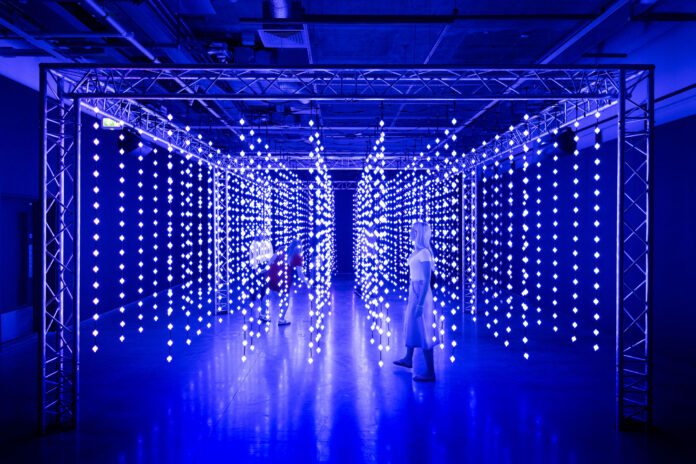
An exhibition at the University of Plymouth is offering visitors an opportunity to experience an immersive light installation, while also investigating its potential benefits for the health and wellbeing of autistic individuals.
The exhibition, titled Submergence, features a grid of thousands of lights and was created by Squidsoup, a group known for its innovative use of light, sound, and technology. The installation has previously been showcased globally and is now on display in The Levinsky Gallery, within the University’s Roland Levinsky Building, until Saturday, August 9.
Alongside the public exhibition, a series of workshops are being held specifically for autistic people. While Submergence was designed as a playful experience, some autistic individuals have reported feeling calmer, more focused, and more engaged when interacting with it. These workshops aim to explore this further, forming part of an ongoing collaboration between the University of Plymouth and Squidsoup to assess whether immersive environments could enhance the health and wellbeing of autistic people.
Professor Chris Bennewith, Executive Dean of Arts, Humanities and Business at the University of Plymouth, highlighted the dual focus of the exhibition.
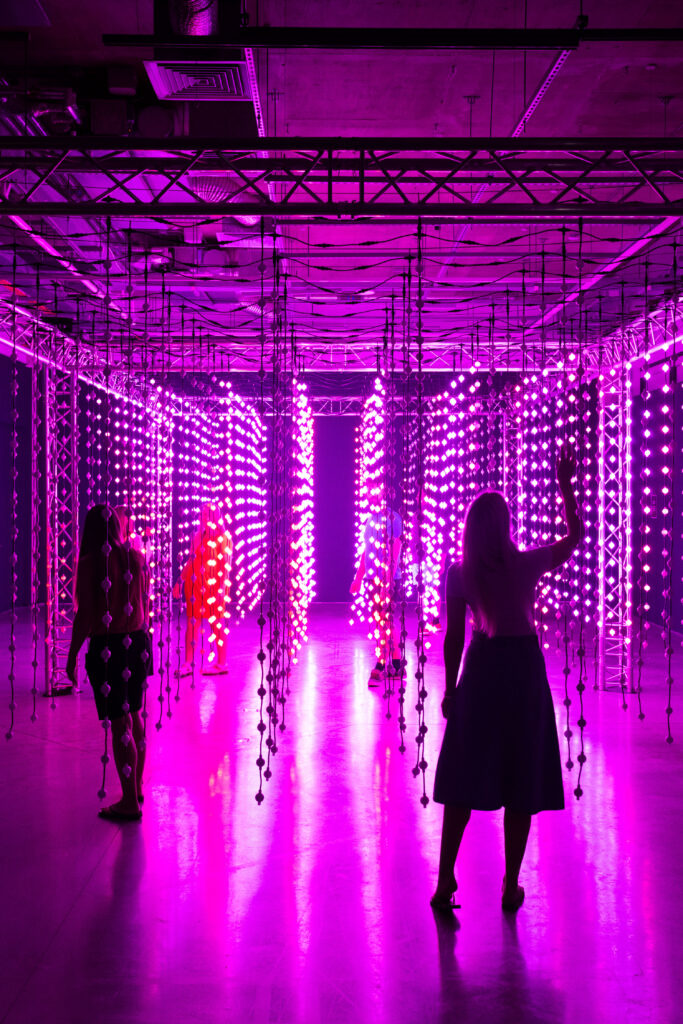
“Tens of thousands of people have experienced Submergence over the past decade, and we hope it will appeal to people here in Plymouth over the coming weeks. But its potential benefits for autistic people are something we plan to explore in detail while the exhibition is running.
He Added:
We will be holding workshops for autistic people and their families, and health and social care professionals working with people with autism. The aim is to see how they experience the grid and to gauge whether there is value in co-creating a new piece of work with autistic people in the future.”
The project is also examining the use of artificial intelligence to personalise immersive experiences and adapt to user actions and responses, acknowledging the diverse nature of autistic individuals.
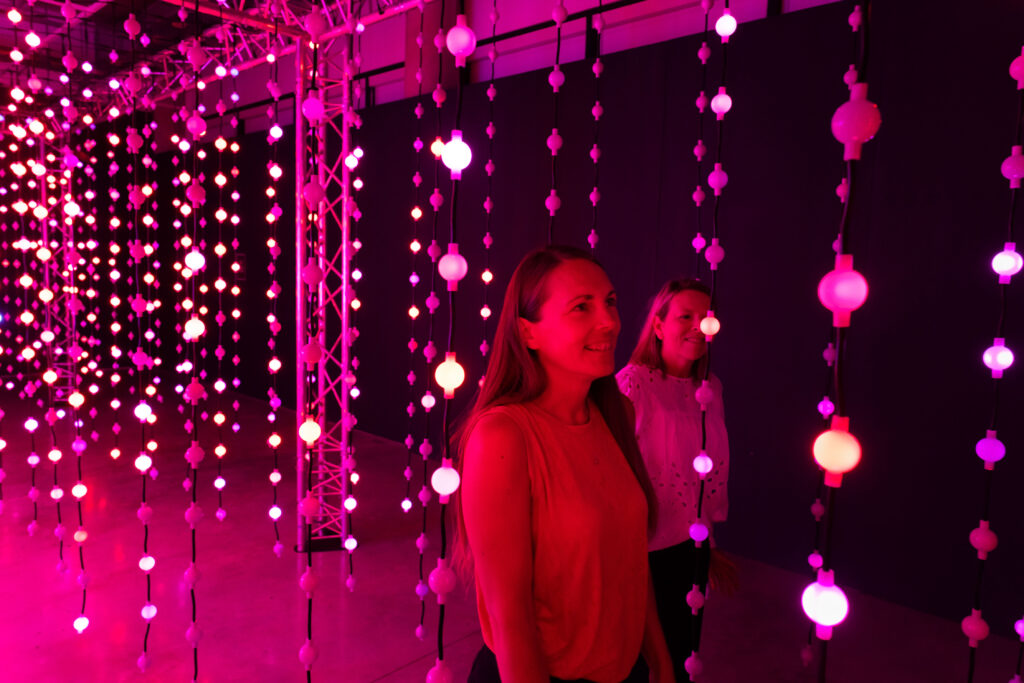
Submergence is open to the public in The Levinsky Gallery, University of Plymouth, from Tuesdays to Fridays (10am to 4pm) and Saturdays (12pm to 4pm) until August 9. Further information about the exhibition is available on the University of Plymouth website.