
There is an old adage that there are decades where nothing happens and weeks where decades happen. For Plymouth Argyle, there seems to be a total lack of the former and far too much of the latter for comfort. We just don’t like to be boring, do we?
I was out having an evening walk on the Wednesday of the Europa Conference League final when the news broke that Miron Muslic was set to leave Plymouth Argyle with immediate effect to join German fallen giants Schalke 04.
Within moments this was followed by a pretty irate sounding Plymouth Argyle statement confirming that we had ‘reluctantly’ given permission for this despite bending over backwards for him to build the club how he wanted it. Or, well, words to that effect anyway.
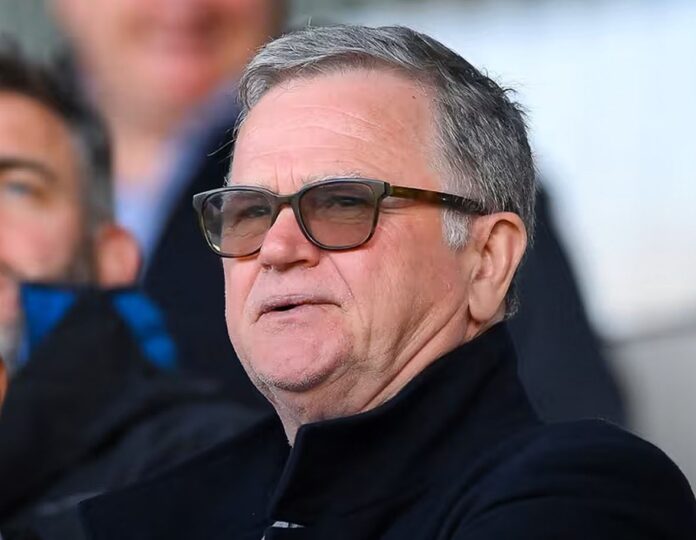
Muslic’s departure cannot be said to have fallen out of a clear blue sky. Indeed, my last editorial for this very paper was to state the importance of keeping the Austrian at the club – at all costs, if necessary. In three consecutive interviews in the final week of the season, he refused to confirm he’d be at the club next season. It did look as though he’d committed, but it took just a few short weeks for events to overtake optimism.
Muslic – Inauthentic?
For months, I will admit to having been sceptical about Muslic. Despite some brief early highlights like the famous win over Liverpool and the 5-1 rout of Millwall, I was far from sold that his ultra-direct style of football was right for us. Bluntly, I also wasn’t sure about him as a person: he was charismatic but seemed inauthentic. I was far from convinced he’d do anything other than leave at the first opportunity when it came about.
Clearly, I was wrong about him being a bad fit as a coach. All the evidence shows as much. The upturn in form after the final international break was remarkable. But, maybe after all, I was right about him as a person.
PREVIOUS ARGYLE LIFE ARTICLE
Nobody can deny him the chance to manage in front of 61,000 sell-out crowds but the manner of his departure was to say the least sour. He gave false assurances to the board that he was committed and pretended to have plans to be here when his agent was touting his name to all manner of German clubs.
In my last piece, I intimated that the club would need to ask questions of themselves if they couldn’t tie him down. Frankly, I retract that. I was wrong about Muslic the coach, right about Muslic the bloke. We can do just fine without him.
So now the question inevitably goes to: what next? I think the first and most important thing is to gain promotion back to the Championship at the first attempt. After Muslic compensation and player sales, we will surely have one of the biggest budgets in the league. However, many of Argyle’s problems have come from thinking too far in the short-term.
Yes, promotion is important, of course it is. You’d be a fool to say otherwise. But it would be a critical error for the Greens to rot in the cycle of short-termism. Argyle have changed their style from a controlled yet attacking 4-3-3 under Schumacher, to a high press ‘FA House style’ 3-4-3 under Foster, to an ultra-possession-based symmetrically fluid 4-3-3 under Rooney (that was the intention anyway!) to an anti-possession system under Muslic.
Most successful clubs in this day and age have a semblance of strategic direction. They don’t change their philosophy and approach this often. Look at Norwich and Swansea – their best success came in an era where you pretty much always associated them with playing good football. I’d absolutely argue for a consistently defined approach over a ‘wing it case by case’ style of managerial hire.
The other side of the argument is that this is overtly inflexible. And yes, obviously it’s true that you need to be able to adapt a game plan if it isn’t working. But to have a consistent style does not mean that you can’t make tweaks. Some managers will be more or less possession based than others, more or less controlled than others, and prefer a 3-4-3 to a 4-3-3. That’s all fine. Here’s what shouldn’t change:
“We have been very explicit about this. We want an Argyle way of playing football. There will be little bits of differences between managers but essentially we are going to be playing on the ground vertical football with an emphasis on attack.”
Not my words, the words of Simon Hallett himself to our fellow members of the Argyle podcast fraternity Pilgrims Podcast in 2024. There is room for variation but that cannot be infinite. ‘Vertical’ indicates we don’t want ultra-slow, Spain 2010 style death by possession. Equally, the rest of the paragraph indicates we don’t want ultra-direct mangers or defensive ones either.
Somewhere, over the last few years, we went away from that a little bit. Foster was a big deviation, Muslic was an even bigger one. If Muslic wasn’t poached, I’d have been happy to keep him because (despite being stylistically discordant) he was clearly extremely capable.
Plymouth Argyle – Silver Lining?
But with every cloud, comes a silver lining. I think this represents the perfect opportunity to return to the ‘Club Argyle’ style of football that saw us climb the leagues and is so suited to a league where we hope to be dominant.
Argyle’s business model depends largely on player trading. An attacking and expansive style is far more likely to get the best out of attacking players.
A defence first style, whilst it may get team success, is less likely to allow individuals to shine and consequently less likely to drum up player sales.
Equally, we are putting so much focus into youth development, especially with the progress around Foulston Park. Again, talented young players with coaching on fine tuned technical skills are far more likely to be integrated into such a system as opposed to one where beef/brawn is king.
Finally, fans are more likely to stick with the team through bad results when the football is good even if results are taking a hit. Season ticket renewals and matchday sales remained mostly very high – knowing that entertainment is paramount has to be a part of that. If you’re not going to see a win, at least lose in style.
There are many reasons that a progressive style of football is the way to go for a club like ours, and many case studies of supporting evidence. I don’t have the page space to go into names right now but the most important thing isn’t actually WHO we appoint. It’s what type of manager and what type of person we appoint. If we get that right, fans will have a lot more patience even if the success isn’t immediate.
Argyle need to use this appointment to go back to basics and to ride or die on ‘vertical, on-the-ground attacking football’.
For more Argyle Life content visit: www.argyle.life