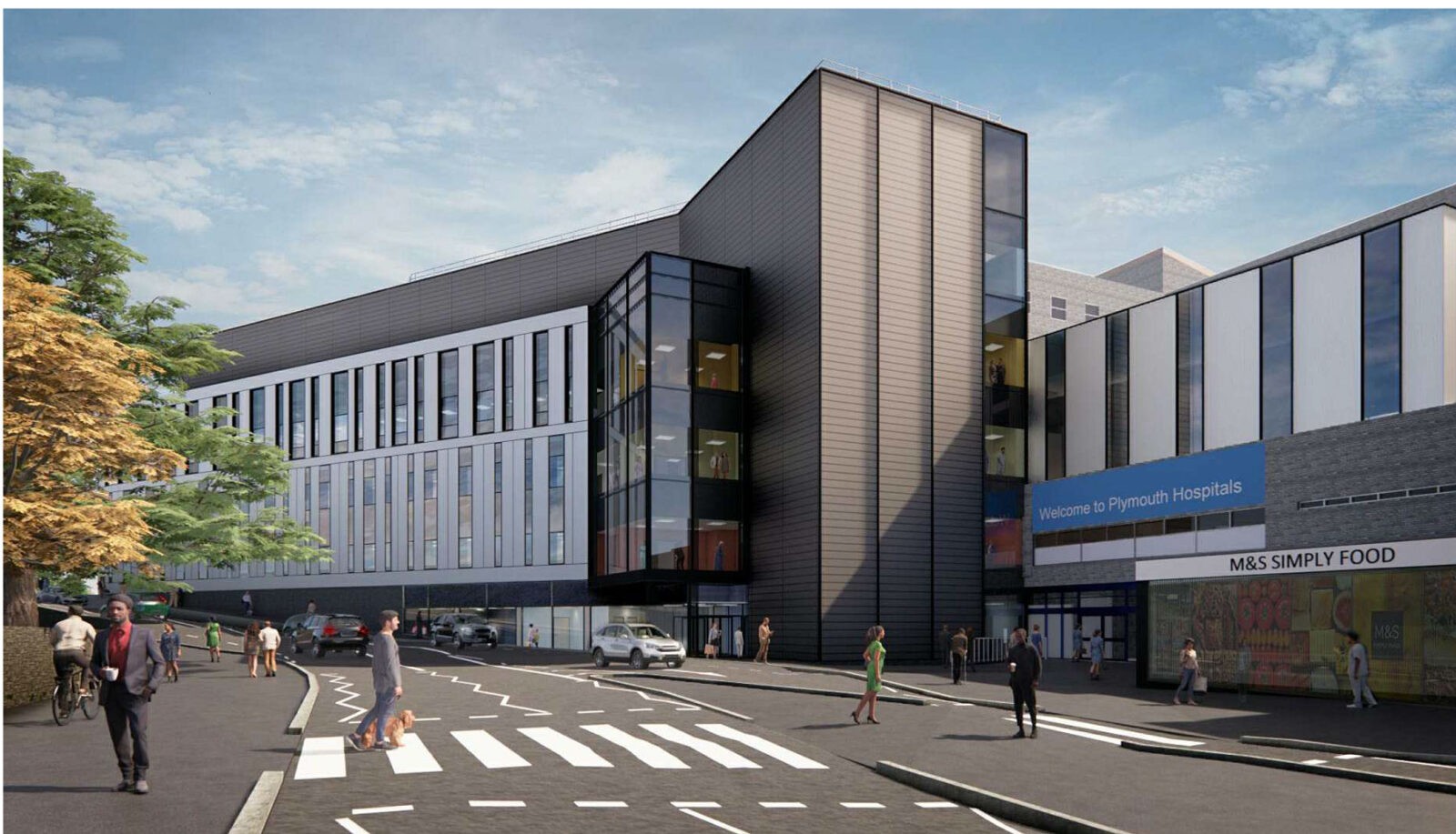

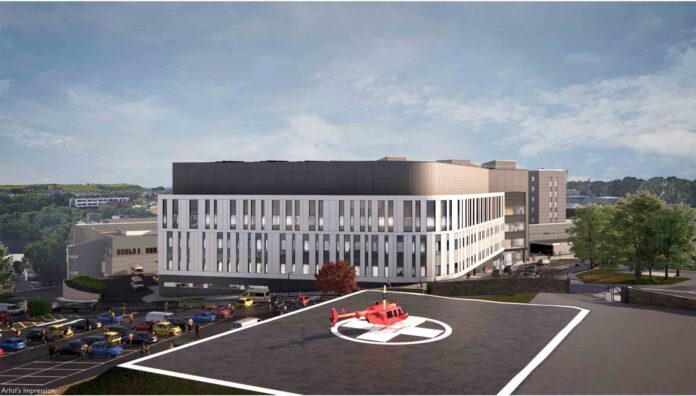
Plans for the new Emergency Department at Derriford Hospital have been submitted to Plymouth City Council.
The new four-storey building will feature an extension of the existing hospital to provide a new Emergency Department including facilities for imaging, emergency surgery and interventional radiology. The proposal has been prepared by leading planning consultants Stride Treglown on behalf of University Hospitals Plymouth NHS Trust. The multi-million pound development is also known as ‘Future Hospital Phase 1.’
The proposal includes the comprehensive internal refurbishment of the existing Emergency Department to convert it to a paediatric emergency facility along with the four storey building which will provide additional accommodation to meet current and future demand.

It is intended that the new-build element will contain new Emergency Department facilities, a Same Day Emergency Care facility (SDEC), imaging facilities, radiology, training, staff rest and welfare facilities, emergency surgery theatres and administrative offices. The Future Hospital Phase 1 project is the first stage of the long-term plan to develop and transform the healthcare facilities at the Derriford Hospital site. Future Hospital director, Stuart Windsor said:
“This new facility will consist of two floors of emergency care facilities, one of which will be devoted to same day emergency care; a short stay ward; a new paediatric emergency department; five new interventional theatres; four conventional theatres and all the support accommodation and imaging capacity that’s associated with our emergency care pathway.”
Chief Executive, Ann James said:
“This purpose built facility will create a modern space where we can effectively and efficiently care for the sickest of patients and also deal with the increasing numbers that are presenting to the hospital.
“We will be able to progress the facilities for same day emergency care, to reduce waiting times for those who need to be seen and treated, but don’t need to be admitted to the hospital.
“Really importantly, we’ll not only have state of the art diagnostic equipment to support faster diagnosis but also new interventional radiology theatres and surgical theatres which is at the leading edge of clinical practise and innovation.”
The plans are part of the government’s commitment to build 40 new hospitals by 2030, backed by an initial £3.7 billion, the biggest hospital building programme in a generation.