

The quality of bathing water around the South West coastline has come under increasing scrutiny in recent years.
With concerns over public and environmental health rising, a new project is looking to develop a remote, faster and more efficient means of testing the region’s seas and alerting authorities to any potential health hazards that are discovered. The new initiative is being developed by Molendotech Ltd and Plymouth University, who between them have considerable expertise in marine autonomous systems and advanced water testing technologies.
Its aim will be to offer remote near real-time water quality assessments through an autonomous water sampling and testing device that builds on existing technology already developed by the project partners.

RELATED PLYMOUTH WATER NEWS
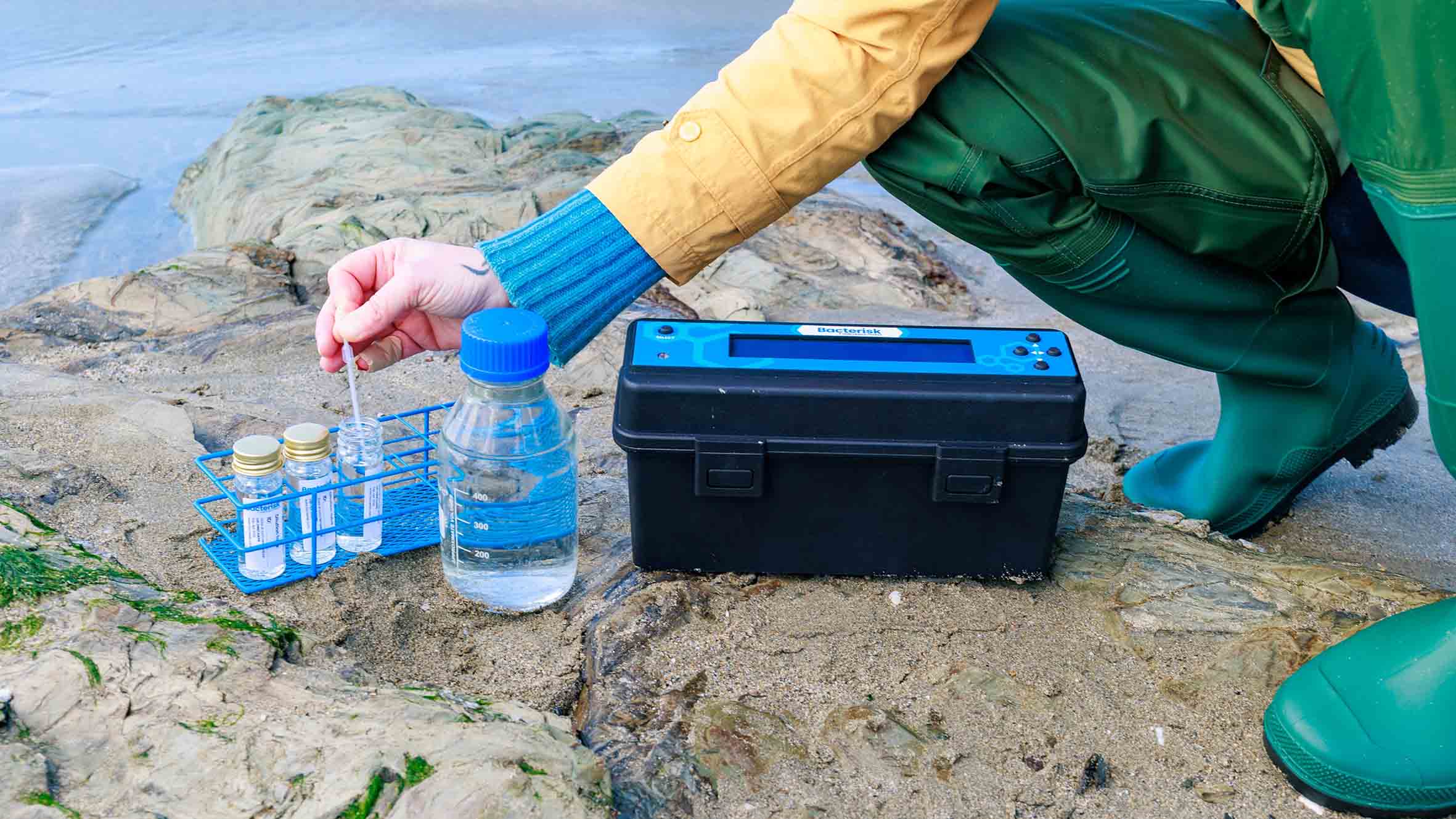
The project will leverage the use of Bacterisk, a near real-time bacteria risk assessment kit that provides an assessment of water quality in 15 minutes (instead of other methods that currently take longer than 48 hours) and adapt it to allow the remote assessment of water quality.
Molendotech is a spin-out company of Plymouth University, and works out of two University-managed facilities – the Brixham Laboratory in Devon and the Health and Wellbeing Innovation Centre in Truro, Cornwall.
The company develops rapid pathogen testing technology and Bacterisk is an easy-to-use, portable and rapid test to monitor and detect pathogens found in water and deliver quick and accurate results.
Through this new project, that system will be combined with expertise at the University which has resulted in the development of significant advances in marine autonomous systems.
The result will be a floating device that can autonomously collect water samples, process the samples and transmit the resulting data to shore.
In Devon and Cornwall, there are 150 bathing water sites and monitoring the water quality of all the coast in near real time would be challenging and costly.
RELATED PLYMOUTH BATHING WATER SITES NEWS
Firestone Bay declared official bathing water site after MP Luke’s campaign
Bacterisk is already being used by water utilities and other stakeholders in the UK to reduce the risk of public health for water users as current methods deliver a late response and are not adequate at protecting the health of the population.
The new system could allow water samples to be collected from the seabed to the surface as frequently as every 30 minutes. The results would then be communicated automatically to those responsible for identifying and managing public health issues.
The project is one of 12 to have been offered a share of almost £1.85 million of funding from the Innovate UK Launchpad for the Great South West. This Innovate UK Launchpad provides innovation support and funding tailored to the local area’s strengths in marine and maritime, and more information is available at www.greatsouthwest.co.uk/world-leading-marine-and-maritime