
A Plymouth woman who is enjoying the retirement she didn’t think she would live to see after being diagnosed with leukaemia, is hoping that new research, funded by Leukaemia UK, could help dramatically reduce the impact harsh treatments can have on those diagnosed.
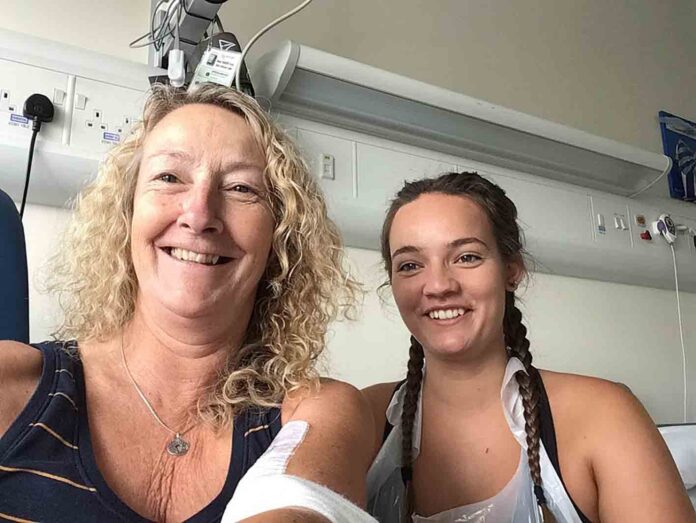
Linda Sellar, 65, from Plymstock, was diagnosed with acute myeloid leukaemia (AML) in 2019 after struggling with breathlessness and picking up infections, including a cough. Blood tests and a bone marrow biopsy led to her diagnosis with AML, which is the most common type of leukaemia. Linda had two rounds of chemotherapy and a stem cell transplant using donor cells from her son, Jack.
Linda struggled with side effects including losing her hair twice, fevers and a fungal lung infection. Now, the former civil servant is in remission and spending her time walking, skiing and travelling with her husband.

She is also welcoming an announcement of new funding from research charity Leukaemia UK which aims to minimise the impact treatments, such as chemotherapy, can have on those diagnosed.
Linda said:
“I can now recognize that my breathlessness was a symptom and am so grateful that my husband insisted on my visit to the GP. I was also lucky that my GP was vigilant. I would urge anyone who has symptoms to visit their GP and insist on blood tests, even if the GP does not consider it necessary.
RELATED PLYMOUTH HEALTH NEWS
Plymouth Mums run London Marathon for NSPCC & Roy Castle Lung Cancer charity
“I would not be here today without the marvellous medical treatments available to cure my AML and the subsequent fungal lung infection. All this is available to people like me thanks to research and funding provided by Leukaemia UK.”
Professor Terry Rabbitts, Professor of Molecular Immunology at the Institute of Cancer Research in London, is exploring a new approach to targeting AML cancer cells to minimise the impact of treatment. This news came alongside World AML Day in April.
Professor Terry Rabbitts said:
“Leukaemia is caused by mutations in the DNA of normal cells, causing them to become cancerous. Sometimes chromosomes break and are joined to other chromosomes. If this happens it can result in ‘fusion proteins’ – these only occur in cancer cells, so they are specific targets for treatment. My team and I will explore a new approach to targeting fusion proteins by channelling antibodies inside cancer cells.
RELATED PLYMOUTH HEALTH NEWS
Look Good Feel Better cancer charity invites volunteers for open day at Derriford
“We have already begun a new technology that will allow us to deploy antibodies inside cells. Our aim is to get them to bind with the fusion proteins inside cancer cells to destroy them.
“This new anti-cancer strategy will mean fewer side effects for AML patients and should ultimately also benefit other blood cancers and solid tumours.”
Every year almost 3,100 people in the UK are diagnosed with AML yet its survival rates are among the worst of any cancer type. Just 13.6% of people survive longer than five years after their diagnosis.
Fiona Hazell, chief executive of Leukaemia UK, said:
“Treatments for leukaemia, which have remained largely unchanged since the 1960s, are harsh and can cause terrible side effects like the ones Linda sadly experienced.
“We’re delighted to announce Prof Rabbitts’ new project, which, along with our other funded research projects, will help us to accelerate progress in leukaemia treatment and care.
“We want to offer people like Linda the hope of more effective and gentler treatments in the future. Breakthroughs happen all the time and we won’t stop until we have found better, kinder treatments for all those affected.”