
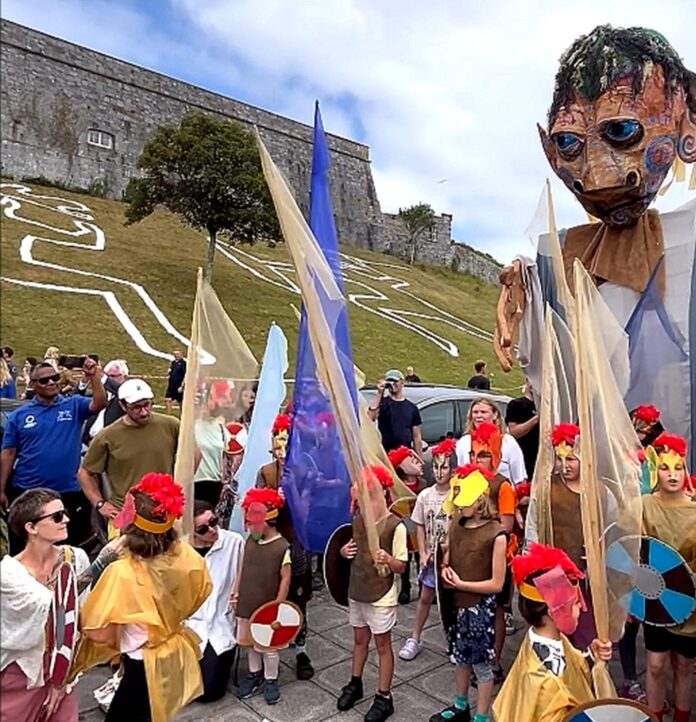
On Saturday, coinciding with Armed Forces Day, Plymouth Hoe saw a unique event featuring a parade and the symbolic return of the mythical figures of Corineus and Gogmagog.
The initiative, supported by the Plymouth Waterfront Partnership, aimed to commemorate a legendary battle said to have taken place on the Hoe.
The event featured a 12-foot giant leading a group of ‘Trojans’ along the waterfront from Stiltskin Theatre Group.
These figures were a recreation imagined by artist Charles Newington, known for the Folkestone White Horse. The Hoe Giants had previously appeared in 2021, but this latest outing included additional elements.
Musical and Historical Context
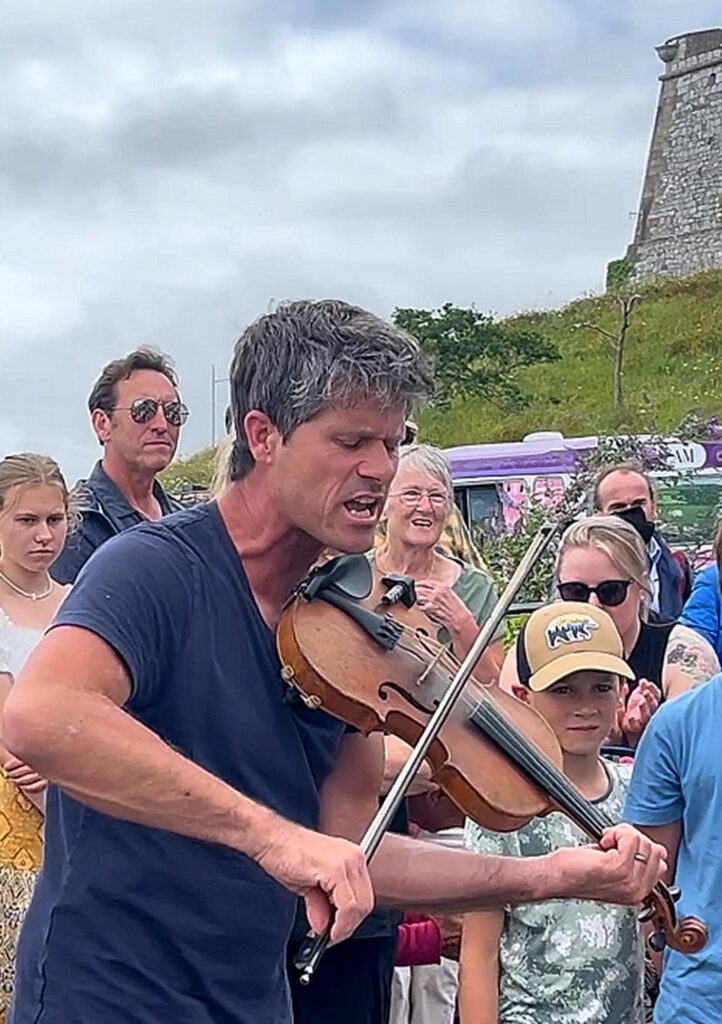
Musician Seth Lakeman debuted a new song, “The Giants of Plymouth Hoe,” following a parade by the Stiltskin Theatre group, who presented their own large interpretation of Gogmagog. Younger participants, dressed as Trojans, were also involved in the procession and performed parts of Lakeman’s new song.
A reception held at the former Corinthian Yacht Club provided further context. Anthony Adolph, a genealogist and historian, discussed the figure of Brutus within British mythology, suggesting its influence on early literature. He highlighted how the story of Brutus, including his defeat of the ‘Wessex Giants’ in Plymouth, was appropriated by later writers such as Geoffrey of Monmouth, who posited Brutus as the first king of Albion (later Britain). Adolph noted that the ancient tale may have been set in Plymouth due to the city’s historical significance as a tin trading hub.
Artistic Vision and Local History
Artist Charles Newington, inspired by historical accounts of giant figures on the Hoe, had previously approached the city about reinstating them. As no images of the original figures exist, Newington created his own interpretation, complemented by an 18-foot pictorial narrative. He was present at the event to oversee the re-establishment of the Giants and to discuss his artistic vision.
Plymouth historian Chris Robinson offered a perspective on the original purpose of the figures, suggesting they may have been created to mark Plymouth achieving borough status and independence from Plympton in 1439. This period also saw the amalgamation of three areas – Sutton Ralph, Sutton Valletort, and Sutton Prior – into the new town of Plymouth. The Giants are believed to have been a feature of the Hoe until their disappearance during the construction of the Citadel in the late 1660s, meaning they would have been visible to the Pilgrims departing in 1620.
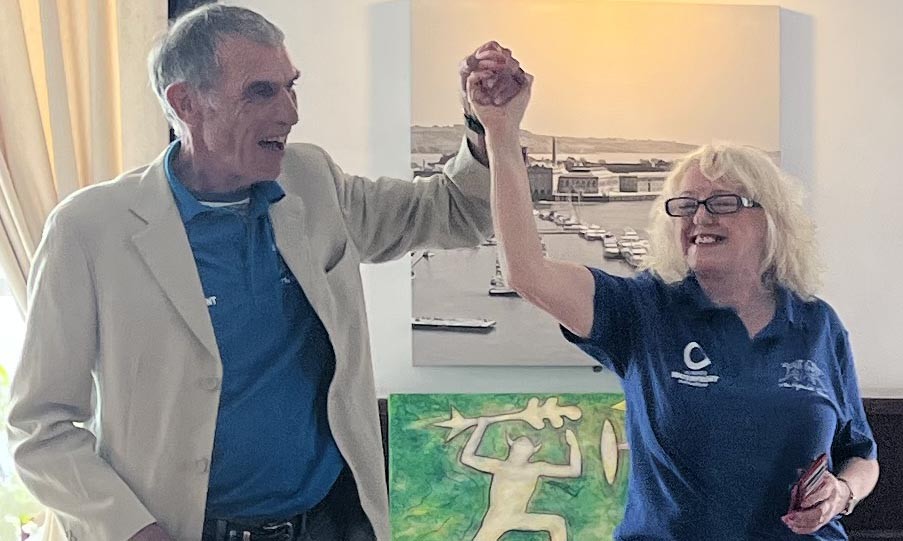
Following the speeches, Seth Lakeman performed his new song a second time. Kim Downer, acting CEO of the Plymouth Waterfront Partnership, was also acknowledged for the organisation’s support of the initiative.
The event marked a temporary return of these historical and mythical figures to Plymouth Hoe, prompting discussion about the city’s rich past.