


A recent analysis of government data found that almost half of children in England who were excluded from school, were those who identified special educational needs, and that number could be even greater with ‘informal’ exclusions.
However, according to local charity, YMCA Plymouth, this is just one example of the difficulties which parents of children with additional needs face when it comes to ensuring their child is included.
YMCA Plymouth’s Managing Director, Andrew Robertson said:

“School can be very difficult for parents with young people with additional needs, but equally we’ve found that outside of school there’s a lack of quality opportunities for these children. That’s where we’re trying to make a difference and ensure they are included and have the opportunities like anyone else.”
Children with Special Educational Needs or Additional Needs comprises largely of young people with developmental disorders such as Attention-deficit hyperactivity disorder (ADHD) or Autism spectrum disorder (ASD). Children with these disorders often have with socialising, relating to other people, communicating, and following instructions. YMCA Plymouth’s Inclusions Coordinator, Arran Sturrock says:
“These children typically struggle to cope in regular activities with others, whether that’s in school, or outside of school. At YMCA, our approach isn’t as simple as just making a club open for young people with additional needs; it goes further by having the right activities which assist their development and making sure we have the correct staff training, so children are engaged fully.”
Rachel who’s child, Macaulay, has ADHD and ASD, says she’s felt that not all clubs Macaulay attended properly catered to his needs, despite them being advertised as open to children with ASD.
“I found he was being left out and not being involved in the activities. I think this came down to the staff not having the right understanding of his needs to help get him involved – it was really heart breaking to see.”
However, Rachel feels coming to YMCA’s sessions have been different for Macaulay, who attends 3 different sessions each week.
“The staff really understand and are supportive and attentive. They seem to get that each child has unique needs. The environment is much smaller which helps too; he loves it and is never left out.”
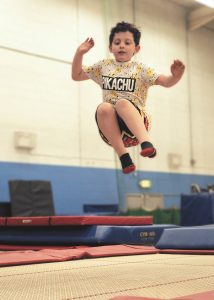
“Sessions like these are really important because it helps him cope with things which maybe usually be difficult like leaving the house, socialising with other people, and being confident with new things. He’s always really excited to come to the club and he especially enjoys trampolining. I’ve noticed each week him build on his confidence and skills. He’s also made some new friends here which is lovely to see.”
“I’m really glad he’s found somewhere he’s properly included. I would really recommend anyone to come to the club and give it a go.”
YMCA Plymouth deliver a youth multi-sport club on Wednesday evenings in partnership with Special Olympics Plymouth & District as well as other specialist sessions including indoor climbing, trampolining and fun days throughout the week. To find out more about specialist activities at YMCA Plymouth, visit ymcaplymouth.org.uk/inclusive